
Florida Handyman Laws in 2026
Licensing limits, the $2,500 exemption, Tallahassee requirements, permits, and the work that needs a licensed contractor.
Florida has no single statewide license officially called a “handyman license.” However, that does not mean a handyman can legally perform every type of home repair or remodeling project. Whether a Florida handyman needs a contractor license depends on three main factors:
- The type of work being performed
- The project’s total contract price
- Whether the job requires a building permit or falls within a regulated trade
Florida also allows cities and counties to impose local business, registration, and permitting requirements. Before accepting a project, a handyman should therefore check both state law and the rules of the local building department. For anyone hiring a handyman in Tallahassee, this means checking not only Florida law but also the requirements that apply to the property’s location within Tallahassee or Leon County.
Do You Need a Handyman License in Florida?
Florida does not require a state contractor license for many basic maintenance and cosmetic improvement services. For example, the Florida Department of Business and Professional Regulation, or DBPR, identifies painting, cabinet installation, flooring, countertops, wallpaper, and window treatments as examples of work that may not require a state license. However, a city or county may still require:
- A local business tax receipt
- Local contractor registration
- A certificate of competency
- Zoning approval for a home-based business
- General liability or workers’ compensation insurance
- A permit for the specific project
Florida DBPR advises workers to contact their city or county building department to determine whether local licensing requirements apply. Florida DBPR business information
Understanding Florida’s $2,500 Handyman Exemption
Section 489.103(9) of the Florida Statutes provides a limited exemption for work that is “casual, minor, or inconsequential” when the aggregate contract price is less than $2,500. The aggregate contract price includes:
- Labor
- Materials
- Equipment and supplies
- Every other item included in the project
For example, a job with $1,500 in labor and $1,200 in materials has a total contract price of $2,700. It would not fall below the statutory threshold. The $2,500 rule is not permission to perform any type of work as long as the price remains below the limit. The project must also be genuinely casual, minor, or inconsequential. The exemption does not apply when:
- The project is part of a larger or more substantial operation.
- A major project is divided into smaller contracts to avoid licensing laws.
- The person advertises as a contractor or represents that they are qualified to engage in contracting.
DBPR also explains that work requiring a permit will typically not qualify as casual, minor, or inconsequential. Florida Statutes §489.103
What Work Can a Handyman Do in Florida?
The legality of a job depends on its complete scope and local regulations. Nevertheless, Florida DBPR provides examples of services that generally do not require a state-issued contractor license. These include:
- Painting
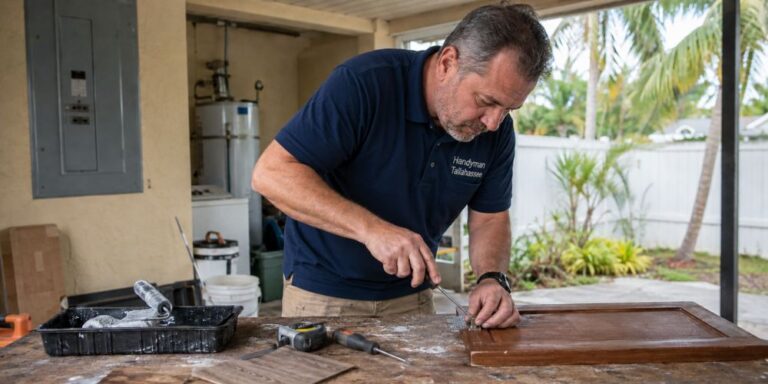
- Installing cabinets and countertops
- Installing wood or tile flooring
- Hanging wallpaper
- Installing window treatments
- Installing insulation
- Installing or replacing drywall when the work does not involve a load-bearing wall, plumbing, electrical wiring, or air conditioning
- Cleaning swimming pools
- Changing an air-conditioning filter
- Installing a plug-in window air-conditioning unit
- Adding a water filter to an existing faucet
- Installing certain prefabricated tool sheds
- Installing pavers or tile walkways
This is not a complete list. Even when state licensing is not required, a local business registration or permit might still be necessary. Florida DBPR license requirements guide
Handyman Laws and Local Requirements in Tallahassee
The same Florida contractor-licensing laws discussed above apply in Tallahassee. Local rules can add another layer, particularly for permits, inspections, business tax requirements, and work performed within a regulated construction trade. Before hiring a provider found through a handyman Tallahassee search, residents should first identify where the property is located. A property inside the City of Tallahassee may be subject to city permitting and inspection procedures, while a property in unincorporated Leon County may fall under county administration. Property owners and service providers should confirm the correct jurisdiction before work begins. The City of Tallahassee provides an online permitting service through its official website. A homeowner or handyman can use the city’s Growth Management and permitting resources to investigate whether a proposed repair requires approval. For work outside the city limits, the relevant Leon County permitting office should be consulted.
Common Tallahassee Handyman Projects
Subject to the project’s complete scope and applicable local rules, ordinary handyman services may include:
- Interior and exterior painting
- Cabinet, shelving, and countertop installation
- Wood or tile flooring installation
- Minor drywall work that does not affect a load-bearing wall or regulated system
- Furniture assembly and hardware installation
- Door adjustments and minor nonstructural repairs
- Weather stripping and other basic property-maintenance work
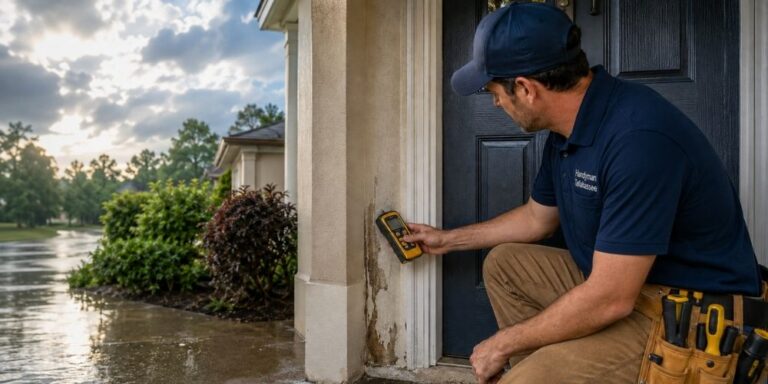
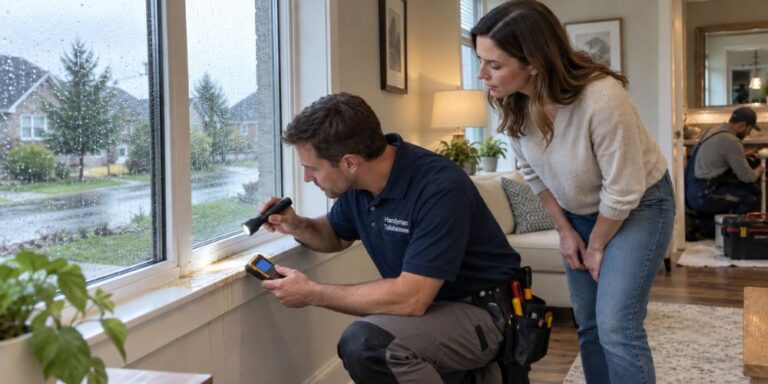
Tallahassee’s humid climate and seasonal storms can create demand for exterior maintenance, moisture-related repairs, and post-storm cleanup. However, roofing, structural repairs, electrical work, HVAC work, and regulated plumbing do not become ordinary handyman services simply because the damage resulted from bad weather. Consumers searching for handyman serivces Tallahassee should review the provider’s written scope carefully and verify any claimed contractor license through Florida DBPR. The phrase is commonly misspelled in searches; the correct phrase is “handyman services Tallahassee.”
Tallahassee Permit and Hiring Checklist
Before work begins, homeowners and service providers should:
- Confirm whether the address is inside Tallahassee city limits or in unincorporated Leon County.
- Describe the complete project to the appropriate local permitting authority.
- Ask whether a building permit or licensed contractor is required.
- Check for applicable local business tax or registration requirements.
- Verify a contractor’s license using the Florida DBPR database.
- Use a written agreement that separates permitted handyman work from any licensed-trade work.
The official City of Tallahassee website provides access to online permitting and Growth Management resources. State contractor credentials can be checked through the Florida DBPR License Search.
What Can a Handyman Not Do Without a License?
A handyman should not accept work that belongs to a regulated construction trade unless the person or business holds the appropriate license.
Electrical Work
New wiring, electrical panel work, circuit installation, outlet relocation, and similar electrical services generally require a properly licensed electrical contractor. Even a seemingly simple project, such as installing a ceiling fan or replacing a hardwired fixture, may involve regulated electrical work. The exact requirement should be confirmed with the local building department.
Plumbing Work
Plumbing work involving drinking-water lines, sewer connections, water heaters, or regulated fixtures may require a licensed plumbing contractor. DBPR specifically identifies dishwasher installation involving a potable-water connection and water-heater replacement as work requiring an appropriately licensed person when performed for compensation.
Air-conditioning and HVAC Work
Installing a central air-conditioning system generally requires a licensed air-conditioning contractor. Repairs involving wiring, refrigerant, duct disassembly, or structural changes may also fall within a licensed trade. Changing an air filter or installing a plug-in window unit is different from repairing or modifying a central HVAC system.
Roofing Work
Constructing, replacing, or performing regulated repairs on a roof requires an appropriate contractor license. A handyman should not assume that a small roof repair is exempt merely because its price is below $2,500.
Structural Remodeling
A project involving the alteration or replacement of a load-bearing wall is not ordinary handyman work. Structural additions such as carports, sunrooms, garages, or similar buildings also require a properly licensed contractor when performed for compensation.
Swimming Pool Equipment
Basic pool cleaning does not require a state contractor license. However, repairing or replacing a swimming pool pump for compensation requires an appropriately licensed professional, according to DBPR.
Does a Handyman Need a Building Permit?
Florida law, building codes, and local ordinances establish permit requirements. They vary by project and jurisdiction. Common permit-related projects may include:
- Structural alterations
- Electrical installations
- Plumbing modifications
- HVAC replacement
- Roofing work
- Window and exterior-door replacement
- Additions or major remodeling
A project that requires a permit will generally fall outside the ordinary minor-work exemption. Before starting a questionable job, the handyman should give the local building department the complete scope of work and ask whether a permit and licensed contractor are required. A business tax receipt is not a contractor license and does not authorize someone to perform regulated construction work.
Can a Homeowner Obtain the Permit for a Handyman?
Florida provides an owner-builder exemption in certain circumstances, but it should not be used to avoid contractor licensing requirements. A handyman should not:
- Ask a homeowner to obtain a permit merely to avoid licensing rules
- Use another contractor’s license number
- Borrow or rent a contractor license
- Have an unrelated contractor “pull a permit” for work the contractor will not supervise or perform
- Claim to work under someone else’s license without a lawful business relationship
Florida law restricts the improper use of contractor license numbers and permits. The owner-builder exemption also carries specific responsibilities and limitations for the property owner.
Certified vs. Registered Florida Contractors
Florida recognizes two important types of contractor credentials:
| Credential | Authorized work area |
|---|---|
| Certified contractor | May work statewide within the approved license category |
| Registered contractor | May work only in the local jurisdictions covered by the registration |
Contractor categories include general, building, residential, roofing, plumbing, mechanical, air-conditioning, pool and spa, solar, and other specialty areas. A handyman who wants to perform larger remodeling projects or regulated construction work should investigate the appropriate contractor license instead of relying on the minor-work exemption. Florida DBPR contractor licensing portal
Penalties for Unlicensed Contracting in Florida
Performing regulated contracting work without the required license can result in serious consequences. Under Section 489.127 of the Florida Statutes, prohibited conduct includes:
- Acting as a contractor without proper certification or registration
- Advertising as available to perform regulated contracting work without a license
- Pretending to be licensed
- Using another person’s contractor license
- Performing permit-required work without an active permit
- Violating local ordinances governing uncertified or unregistered contractors
A first violation by an unlicensed person can be prosecuted as a first-degree misdemeanor. A repeat violation can become a third-degree felony. Unlicensed contracting during a state of emergency declared by Florida’s governor can also constitute a third-degree felony. This is particularly important after hurricanes, flooding, or other disasters. Authorities may additionally issue stop-work orders and civil or administrative penalties. Florida law permits an administrative fine of up to $10,000 for unlicensed contracting in qualifying cases. Florida Statutes §489.127
Can an Unlicensed Handyman Enforce a Contract?
Florida Statutes Section 489.128 generally makes contracts entered into by unlicensed contractors unenforceable when a license was legally required for the work. That means an unlicensed person may have difficulty suing a customer for unpaid compensation if the work required a contractor license. The problem cannot necessarily be corrected simply by obtaining a license after completing the project. This creates a major financial risk in addition to possible criminal and administrative penalties.
How to Operate a Handyman Business Legally in Florida
A Florida handyman can reduce legal and financial risk by following these steps:
- Create a detailed written scope for every project.
- Calculate the total price, including labor and materials.
- Confirm that the job does not involve regulated electrical, plumbing, HVAC, roofing, pool, or structural work.
- Ask the local building department whether a permit is required.
- Obtain all required local business tax receipts and registrations.
- Carry suitable general liability insurance.
- Comply with workers’ compensation requirements when applicable.
- Use written estimates, contracts, and change orders.
- Never advertise as a licensed contractor without an active license.
- Refer regulated work to a properly licensed professional.
- Verify subcontractors through the official DBPR license search.
- Keep invoices, approvals, photographs, and inspection records.
Final Thoughts
Florida handymen can legally provide many maintenance, installation, and cosmetic improvement services without holding a state contractor license. However, the exemption is narrower than many people believe. The $2,500 threshold is not a universal license-free limit. The work must also be genuinely minor, must not be part of a larger project, and must not fall within a regulated or permit-required trade. When there is any doubt, the safest approach is to contact the city or county building department before signing the contract or beginning work. A short compliance check can prevent fines, stop-work orders, unenforceable contracts, and potentially unsafe repairs. For Tallahassee homeowners, the best approach is to choose a provider based on the exact job, not simply the handyman label. A reliable handyman should be willing to explain the scope, identify work that requires a licensed trade professional, and confirm whether local permits are necessary.
Frequently Asked Questions
Can a handyman perform any job under $2,500 in Florida?
No. The price must be below $2,500, but the work must also be casual, minor, or inconsequential. Regulated, structural, or permit-required work does not automatically become legal merely because it costs less than $2,500.
Does a painter need a contractor license in Florida?
Painting is listed by DBPR as work that generally does not require a Florida state contractor license. However, local business registration or licensing requirements may still apply.
Can a handyman replace a toilet or faucet?
The answer depends on the scope of the plumbing work and local regulations. A job involving regulated plumbing or potable-water connections may require a licensed plumbing contractor. The local building department should be consulted before accepting the job.
Can a handyman install a ceiling fan?
A ceiling-fan installation may involve regulated electrical wiring. A handyman should not assume it is permitted without first checking local electrical licensing and permit requirements.
Can a handyman install flooring in Florida?
DBPR lists wood and tile flooring installation as examples of services that generally do not require a state contractor license. Local requirements should still be checked.
Does a Florida business tax receipt count as a contractor license?
No. Florida law expressly states that a business tax receipt is not a contractor license. It does not authorize a handyman to perform regulated contracting work.
How can homeowners verify a contractor’s license?
Homeowners can search by name or license number using the official Florida DBPR License Search.
Does a handyman in Tallahassee need a local business license?
Depending on the business location, legal structure, and services offered, local business tax or registration requirements may apply even when a Florida contractor license is not required. The provider should confirm the current requirements with the City of Tallahassee or Leon County before advertising or accepting work.
Where should a Tallahassee homeowner check permit requirements?
For a property within city limits, start with the City of Tallahassee’s Growth Management and online permitting resources. For a property in unincorporated Leon County, contact the appropriate Leon County permitting authority. Always provide the complete scope of work because permit requirements depend on what will actually be repaired, installed, or altered.
Reliable Handyman Help in Tallahassee
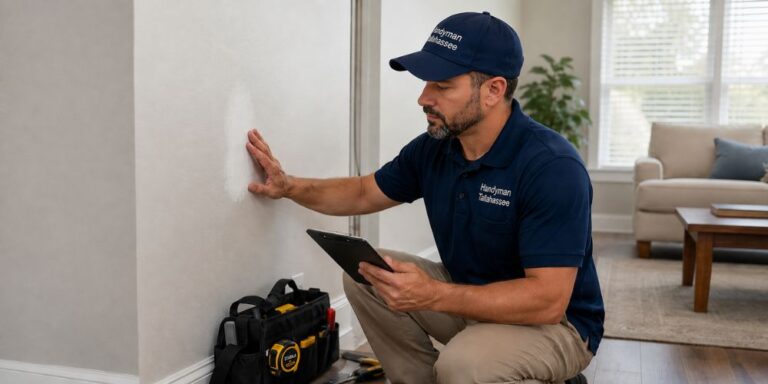
Drywall repair, TV mounting, doors, and furniture repair or assembly.