What a Handyman Can and Can’t Legally Do in Florida?
A clear guide to the work a Florida handyman may generally perform and the projects that require a licensed contractor.
Hiring a handyman can be a practical and affordable way to complete repairs, installations, and general property maintenance. However, Florida law limits the type of work an unlicensed handyman may perform. A handyman can usually handle cosmetic and minor nonstructural projects, but electrical, plumbing, roofing, HVAC, structural, and permit-required work may need an appropriately licensed contractor. Homeowners comparing handyman services Tallahassee providers should therefore look beyond price and confirm that the proposed work falls within the provider’s legal scope. According to Florida handyman laws, whether a job is legal depends on its complete scope, permit requirements, and applicable state and local rules. This article focuses specifically on the jobs a handyman can and cannot perform.
What Can a Florida Handyman Legally Do?
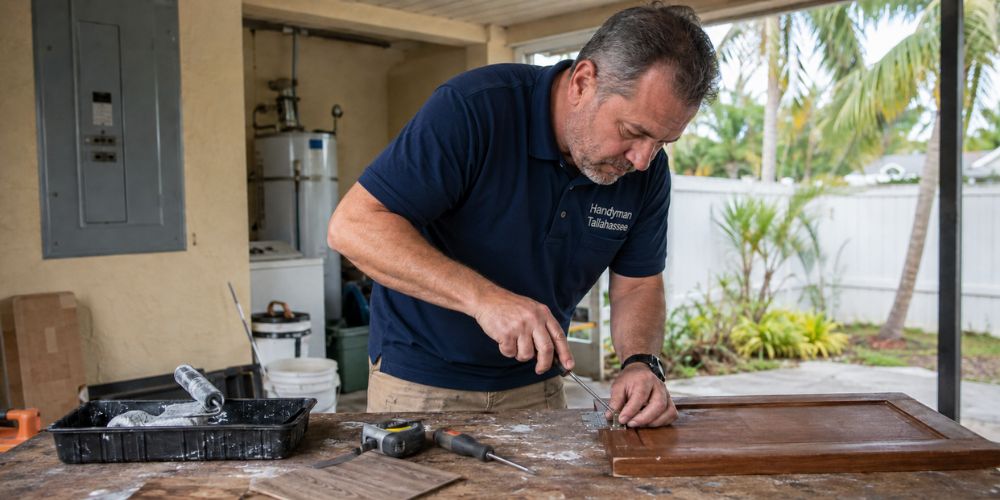
A Florida handyman can generally provide maintenance, furniture repair, drywall repair, TV mounting, door installation, and minor nonstructural services that do not require a state contractor license or building permit. Florida DBPR gives examples such as painting and installing cabinets, countertops, wallpaper, window treatments, and wood or tile flooring. An unlicensed handyman generally should not accept work involving regulated electrical systems, potable-water plumbing, central HVAC systems, roofing, load-bearing walls, or other work requiring a licensed contractor. A low project price does not automatically make regulated work legal.
| A handyman may generally do | A licensed professional may be required for |
|---|---|
| Painting and wallpaper installation | New wiring or electrical-panel work |
| Cabinet and countertop installation | Regulated plumbing and potable-water connections |
| Wood or tile flooring installation | Central air-conditioning installation or repair |
| Window-treatment installation | Roof construction, replacement, or regulated repair |
| Minor nonstructural drywall work | Load-bearing wall alteration |
| Furniture assembly and basic hardware installation | Additions, garages, carports, or structural construction |
| Pool cleaning | Swimming-pool pump repair or replacement for compensation |
| Changing an air-conditioning filter | Permit-required construction work |
This table is only a starting point. The complete project scope and local requirements determine whether a particular job is legal.
Work a Handyman Can Generally Do in Florida
The services below reflect the work advertised on the Handyman Tallahassee website. Whether a particular job is permitted still depends on its complete scope, local rules, and whether it affects a regulated building system.
Furniture Repair and Assembly
Furniture repair in Tallahassee may include assembling new furniture, tightening loose joints, repairing wobbly chairs, restoring damaged pieces, and replacing ordinary nonstructural hardware. These tasks generally do not involve regulated construction trades, although wall-secured furniture must be anchored carefully to avoid concealed wiring or plumbing.
Minor Drywall Repair
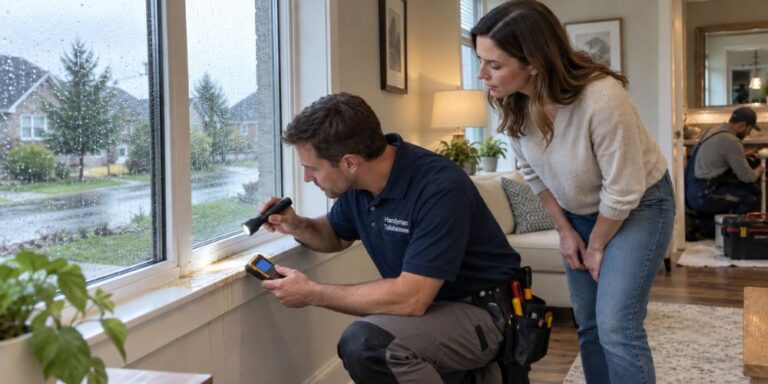
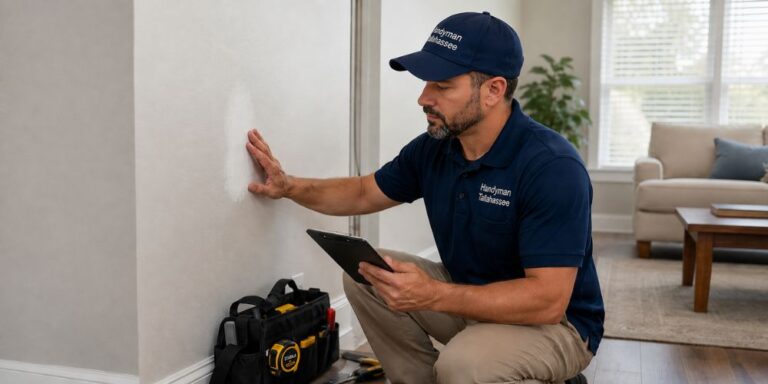
Drywall repair in Tallahassee may include patching holes, filling cracks, sanding repaired areas, and preparing the surface for paint. The work must remain nonstructural and must not include moving a load-bearing wall or altering plumbing, electrical wiring, or air-conditioning systems. Water-damaged drywall should not be repaired until the source of the moisture has been identified and handled by the appropriate professional.
TV Mounting
TV mounting in Tallahassee may include locating suitable framing, installing a properly rated bracket, mounting the television, and using external cable covers for a cleaner appearance. A standard mounting job should not include installing a new electrical outlet, relocating wiring, or making other regulated electrical changes. Those tasks should be referred to a licensed electrical contractor when required.
Door Installation and Repair
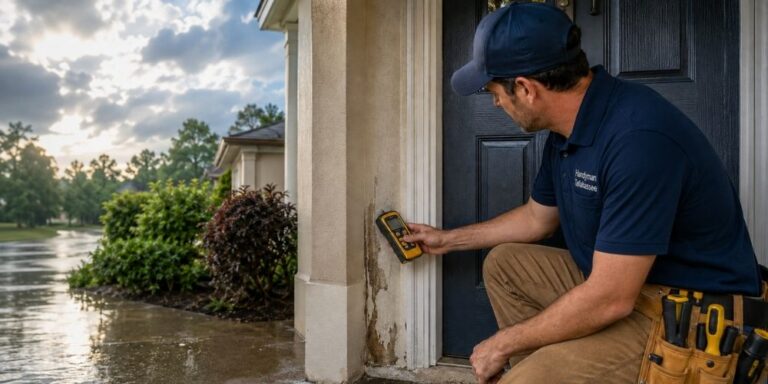
Door installation in Tallahassee may include adjusting a sticking interior door, replacing ordinary hardware, aligning hinges and latches, weatherstripping, or fitting a door when the work is nonstructural and does not require a permit. Reframing a structural opening, altering a load-bearing wall, or completing permit-required exterior-door work may require an appropriately licensed contractor. The complete scope should be confirmed with the local building department before the job begins.
What a Handyman Cannot Legally Do Without the Required License
Calling a project a “small repair” does not exempt it from Florida’s licensing requirements. An unlicensed handyman should not accept the following work unless an applicable exemption clearly applies and the local authority confirms it.
Electrical Work
New wiring, electrical-panel work, circuit installation, outlet relocation, and similar services generally require a properly licensed electrical contractor. Installing a hardwired light or ceiling fan may also involve regulated electrical work. Because local requirements and the exact scope matter, the safest step is to check with the building department instead of assuming the job is permitted.
Plumbing Work
Work involving potable-water lines, sewer connections, water heaters, and regulated plumbing fixtures may require a licensed plumbing contractor. Florida DBPR specifically identifies water-heater replacement and compensated work connecting to a potable-water supply as licensed activities in relevant circumstances. Replacing a faucet or toilet should not automatically be treated as ordinary handyman work. Connections, valves, drainage changes, permit requirements, and local regulations may affect what work is allowed. Confirm the full project scope with the appropriate local authority before starting.
Central HVAC Work
Installing a central air-conditioning unit generally requires a licensed air-conditioning contractor. Work involving refrigerant, system wiring, structural changes, or duct disassembly may also require proper licensure. An air-filter change is minor maintenance; central-system repair is not.
Roofing
Roof construction, replacement, and regulated roof repairs require an appropriately licensed contractor. A handyman should not assume that a small or inexpensive roof repair automatically falls within ordinary handyman work. Roof work presents serious safety, insurance, code, and water-intrusion risks.
Structural Remodeling
A handyman cannot alter or replace a load-bearing wall. Building an addition, garage, carport, sunroom, or similar structure for payment also requires a properly licensed contractor.
Permit-Required Work
Permits are commonly required for structural changes, roofing, electrical and plumbing work, HVAC replacement, exterior door or window replacement, additions, and major renovations. Requirements vary by location and project type. A handyman cannot start work that requires a permit until the permit is approved. A homeowner also cannot obtain a permit simply to bypass contractor licensing laws.
Can a Homeowner Pull the Permit for a Handyman?
Florida has an owner-builder exemption for qualifying property owners in specific circumstances. It is not a shortcut that helps an unlicensed handyman to operate as a contractor. A handyman should never:
- Ask the homeowner to obtain a permit to avoid licensing requirements
- Borrow, rent, or use another person’s contractor license number
- Claim to operate under a contractor’s license without a valid business relationship
- Ask an unrelated contractor to obtain a permit without properly managing and supervising the work
Under the owner-builder exemption, the property owner takes full responsibility for the project. Before choosing this option, the owner should read all required notices and contact the local permitting office for guidance.
Tallahassee and Leon County Handyman Requirements
Florida contractor-licensing laws apply throughout Tallahassee and Leon County, but local permits and business requirements add another layer. The correct authority depends on where the property is located. For a property inside Tallahassee city limits, check with the City of Tallahassee Growth Management and permitting department. For a property in unincorporated Leon County, contact the appropriate Leon County permitting office. Before hiring a handyman in Tallahassee, homeowners should:
- Confirm whether the property is inside city limits or unincorporated Leon County.
- Write down the complete scope of work, including related electrical, plumbing, HVAC, or structural tasks.
- Ask the relevant building department whether a permit is required.
- Verify any claimed contractor license in the Florida DBPR database.
- Request a written estimate identifying labour, materials, and the total contract price.
- Confirm that regulated work will be performed by the appropriately licensed professional.
- Ask for proof of suitable insurance.
Homeowners commonly hire a handyman in Tallahassee for painting, furniture assembly, TV mounting, door adjustments, shelving, minor nonstructural drywall repairs, and general property maintenance. Some cabinet and flooring projects may also be allowed, depending on the exact scope. A reputable handyman should not perform work that requires a permit or licensed contractor. Local requirements should always be confirmed before work begins. The cost of hiring a handyman in Tallahassee can vary according to the task, materials, access, wall type, and finish required. Homeowners should request a job-specific quote before setting their budget.
Penalties for Unlicensed Contracting in Florida
Unlicensed contracting can lead to criminal charges, fines, and financial loss. Florida law does not allow a person to claim falsely that they are licensed, use someone else’s license, advertise work that requires a contractor’s license, or begin permit-required work without an approved permit. Under Section 489.127 of the Florida Statutes, a first offense may be a first-degree misdemeanor. A second offense may be a third-degree felony. Unlicensed contracting during a governor-declared state of emergency may also be a third-degree felony. This rule is especially important after hurricanes and other disasters. Authorities may stop the work and impose a fine of up to $10,000. Under Section 489.128, an unlicensed person may also be unable to enforce a contract or collect payment for work that legally required a contractor’s license.
How Homeowners Can Hire the Right Professional
Do not hire someone simply because they advertise as a “handyman.” Make sure their qualifications match the work your project requires.
- Get a detailed written estimate.
- Check whether the project requires a permit.
- Verify contractor licenses through Florida DBPR.
- Confirm insurance coverage before work begins.
- Avoid undocumented cash-only agreements.
- Do not allow a large project to be divided into smaller jobs to avoid licensing requirements.
- Be careful if someone asks you to obtain a permit for work they will manage.
- Keep all contracts, invoices, photos, permits, approvals, and inspection records.
A trustworthy handyman in Tallahassee will clearly explain the work they can perform, point out any tasks that require a license, and recommend a licensed professional when needed.
Final Thoughts
A handyman in Florida can legally complete many useful maintenance, installation, and cosmetic projects. Painting, flooring, cabinet installation, minor nonstructural drywall work, furniture assembly, and similar services often fall within an ordinary handyman’s scope. The line is crossed when a project involves regulated electrical, plumbing, HVAC, roofing, structural, pool-equipment, or permit-required work. The project’s full scope matters, so homeowners should confirm uncertain work with the appropriate building department before hiring anyone. When the scope is uncertain, contact the correct Tallahassee or Leon County permitting authority before signing a contract or starting work. A short check can prevent unsafe repairs, fines, stop-work orders, and expensive disputes.
Official Sources
- Florida Statutes §489.127 — Prohibitions and penalties
- Florida Statutes §489.128 — Unenforceable contracts
- Florida DBPR — Services requiring a DBPR license
- Florida DBPR — Construction Industry FAQs
- Florida DBPR — Verify a license
- City of Tallahassee — Growth Management
- Leon County — Permit and Code Services
Reliable Handyman Help in Tallahassee
Furniture repair, drywall repair, TV mounting, door installation, and general property maintenance.