The North Florida Homeowner’s Guide to Humidity & Storm Damage
Learn how moisture enters a home, where damage stays hidden, and what to do before repairing drywall, doors, trim, and other affected finishes.
North Florida’s high humidity, heavy rain, thunderstorms, and tropical weather can be hard on a home. Sometimes damage is obvious, such as a ceiling stain after a storm. In other cases, water enters around a door or window and remains hidden until drywall, trim, or flooring begins to deteriorate.
Humidity damage in North Florida does not always begin with a major flood. A small gap, failed caulk, condensation, or poor ventilation can create a recurring problem. Recognizing it early may prevent a larger repair.
If you already see stained drywall, sticking doors, or damaged trim, an experienced handyman in Tallahassee can help with appropriate home repairs after the moisture source has been corrected.
Why North Florida Homes Are Vulnerable to Moisture
Humidity is moisture held in the air. When warm, humid air meets a cooler surface, condensation can develop on windows, air-conditioning vents, pipes, and other materials. Repeated condensation may damage nearby paint, drywall, wood, and trim.
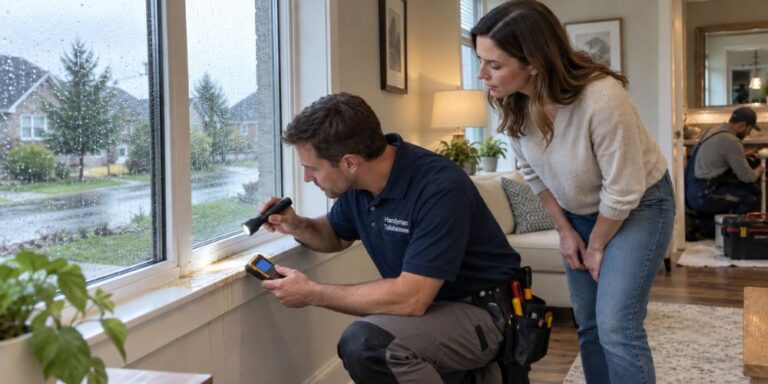
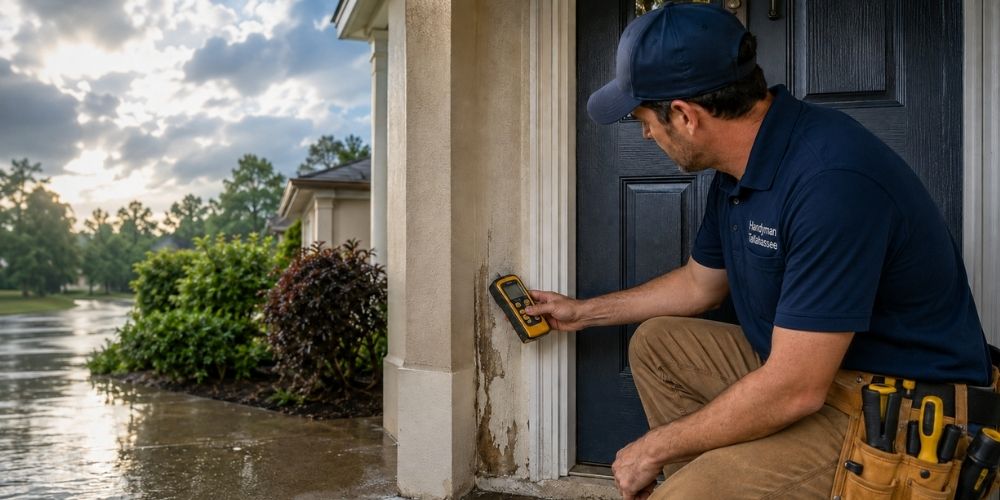
Heavy rain creates another problem. Strong winds can drive water through small gaps around door frames, thresholds, windows, siding, and exterior penetrations. An opening that stays dry during an ordinary shower may leak during severe weather.
Warm, humid conditions may slow drying. A wall can appear dry while moisture remains behind it, beneath flooring, or inside insulation.
Common Signs of Humidity and Storm Damage
Watch for changes that appear during humid weather or after heavy rain:
- Brown or yellow stains on walls and ceilings
- Peeling, bubbling, or blistering paint
- Soft, swollen, or crumbling drywall
- Loose baseboards or separated trim
- Doors that rub, stick, or no longer latch
- Warped or discolored wood
- Rust around hinges or fasteners
- Failed caulk around exterior openings
- Buckled flooring or soft spots
- Recurring condensation or musty odors
How Moisture Damages Drywall
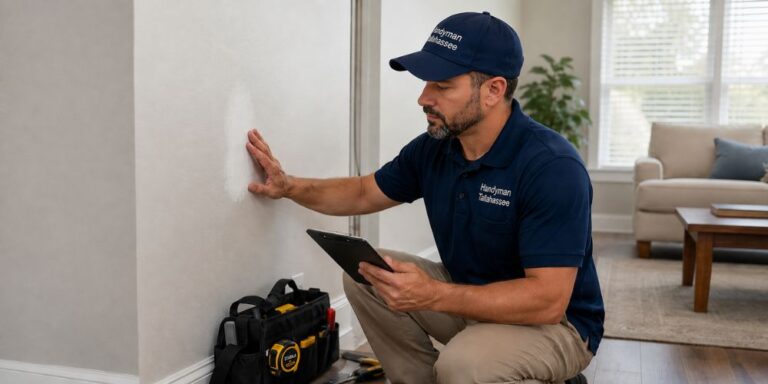
Drywall has a gypsum core covered with paper, and it is not designed to remain wet. Water can stain the finish, weaken the paper, soften the core, release joint tape, or cause a ceiling to sag. Moisture may also affect the insulation and framing behind it.
Whether drywall can be repaired depends on the exposure and type of water. A small area affected by a clean-water leak may be repairable. Soft, distorted, saturated, or contaminated drywall may need replacement.
No finish repair should begin until the water source is corrected and the area has dried sufficiently. If the remaining material is sound, professional drywall repair in Tallahassee can restore the damaged surface.
Why Doors Swell and Stick
Moisture can affect the door slab, jamb, casing, threshold, weatherstripping, hinges, and nearby trim. Wood and some composite materials absorb moisture and expand, causing a door to rub against its frame, drag across the floor, or refuse to latch.
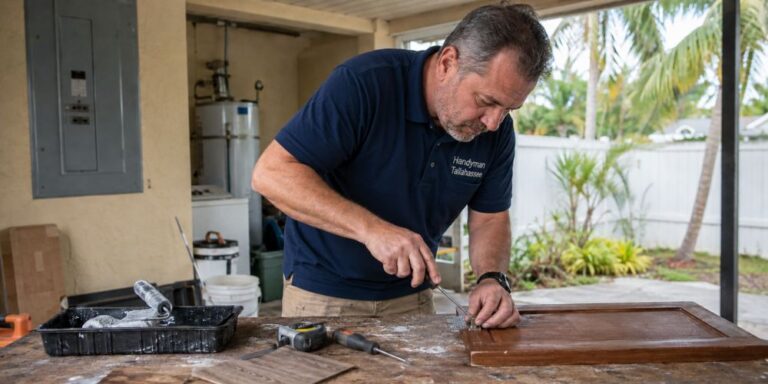
Storm water entering around the frame may also damage the jamb, flooring, and baseboards. Before trimming a sticking door, check for loose hinges, damaged seals, and water entry. The solution may involve adjustment, hardware, weatherstripping, jamb repair, or replacement. Our door repair services in Tallahassee can help with repairable doors and related components.
Where Storm Damage Can Stay Hidden
After severe weather, inspect areas that are easy to miss:
- Behind furniture against exterior walls
- Inside closets and cabinets
- Around exterior door thresholds
- Beneath window trim
- Along baseboards and flooring edges
- Around ceiling vents and attic penetrations
- Beneath sinks and near plumbing connections
A sagging ceiling may contain water and could fail. Stay away from standing water near outlets, wiring, appliances, or electrical panels. Structural, electrical, roofing, contaminated-water, or extensive mold problems should be handled by appropriately qualified professionals.
If you are unsure whom to hire, read what a handyman can and cannot do before scheduling the work.
What to Do After a Storm
- Wait until conditions are safe. Look for electrical hazards, broken glass, standing water, unstable trees, and damaged ceilings. Never climb onto a wet or storm-damaged roof.
- Document the damage. Photograph affected areas and record when the water appeared. Contact your insurer if a claim may be appropriate.
- Prevent further exposure. If it is safe, protect the area and begin drying it.
- Fix the moisture source. Do this before repairing finishes, then assess which materials can be saved or need replacement.
Repair costs vary according to the materials, complexity, damage level, and time required. Our guide to handyman costs in Tallahassee explains the main factors that may affect a project’s price.
How to Reduce Future Moisture Damage
Routine maintenance cannot prevent every storm-related issue, but it can help reduce the risk of damage:
- Maintain the HVAC system and replace filters as recommended.
- Use properly vented bathroom and kitchen exhaust fans.
- Repair plumbing leaks promptly.
- Inspect caulk around doors, windows, and exterior openings.
- Replace damaged weatherstripping and door sweeps.
- Keep gutters clear and direct water away from the home.
- Watch for peeling paint, soft trim, and recurring condensation.
- Inspect the interior and exterior after significant storms.
A humidity monitor can show changes in moisture levels, but it cannot find hidden water. If indoor moisture stays high, consider having your HVAC and ventilation checked.
When to Call a Handyman in Tallahassee
Professional help may be needed when moisture damage affects multiple areas, keeps returning, or requires a clean, professional finish. Once the source of the moisture has been fixed, a handyman can repair damaged drywall, trim, baseboards, doors, hardware, weatherstripping, caulk, and other non-specialized parts of the home.
The right professional depends on the type of damage. Active plumbing leaks, roof problems, structural damage, electrical hazards, contaminated water, and extensive mold growth may require licensed specialists. Our guide to Florida handyman laws explains the types of work a handyman can and cannot perform. Once any specialized work is complete, a local Tallahassee handyman can repair the remaining damaged surfaces and fixtures.
We Can Help With Humidity and Storm-Related Repairs
Stained drywall, loose trim, sticking doors, damaged caulk, and worn finishes should not be ignored, especially when the problem keeps returning. Finding and fixing the source of the moisture, followed by timely repairs, can help maintain your home’s appearance and functionality.
If humidity or a recent storm has damaged your home, we can help. Handyman Tallahassee repairs drywall, doors, trim, and other commonly affected areas. Contact us today to discuss the damage and find the right solution for your home.
Storm-Related Home Repairs in Tallahassee
Help with repairable drywall, doors, trim, caulk, weatherstripping, and finishes after the moisture source is corrected.